
The Gut-Brain Axis
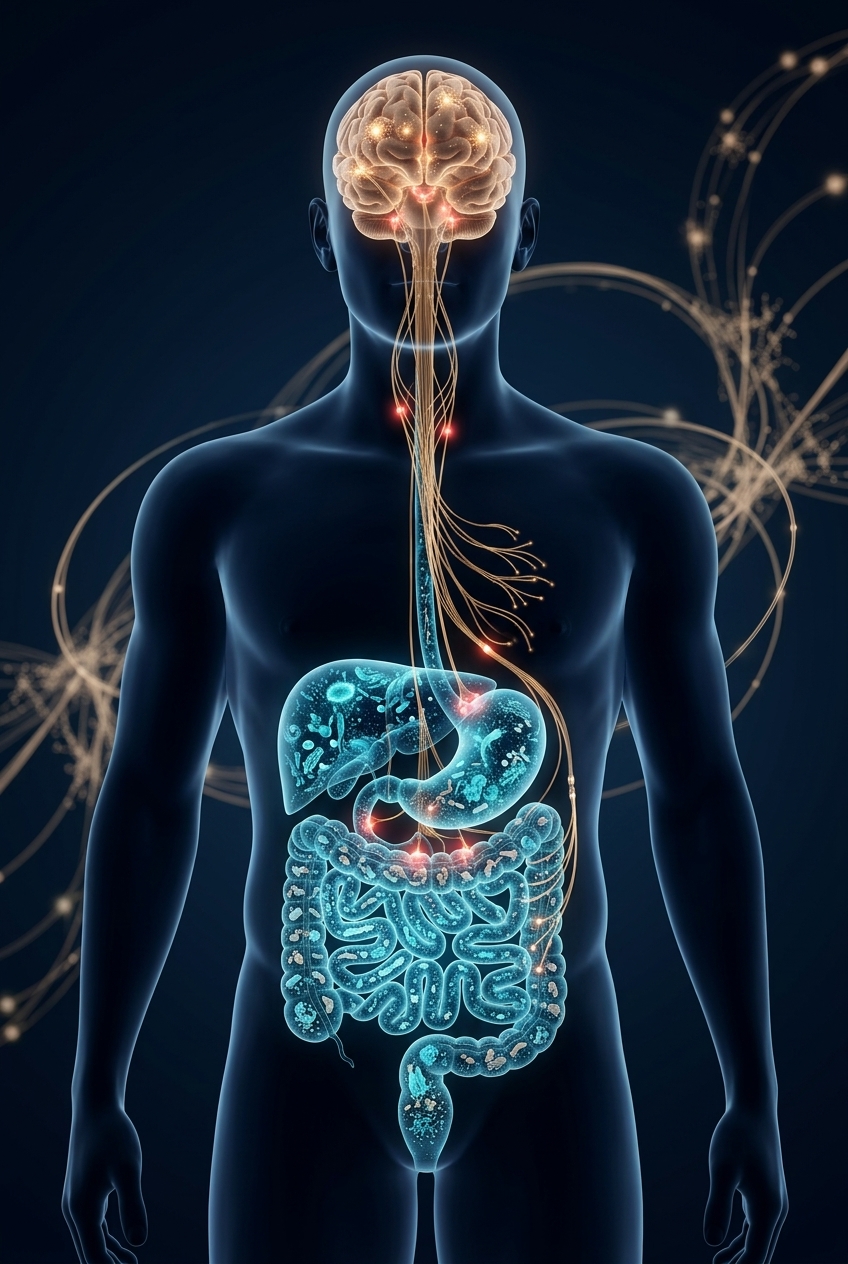
The gut-brain axis is the two-way communication network linking your digestive system and brain — through the vagus nerve, immune signaling and metabolites produced by gut bacteria. It is why stress disrupts digestion and why gut imbalance can surface as mood, focus or energy problems. Integrated Wellness maps your side of the axis with microbiome sequencing read against inflammatory labs and lifestyle data.
How do gut and brain actually communicate?
Three main channels: the vagus nerve carrying signals in both directions, immune messengers responding to gut-barrier state, and microbial metabolites — short-chain fatty acids and neurotransmitter precursors — entering circulation. Roughly 90% of the body's serotonin is produced in the gut.
Cryan's comprehensive Physiological Reviews synthesis documents this bidirectional signaling with converging animal and growing human evidence.
Can gut health really affect mood and focus?
Associations are consistent: lower microbial diversity and specific compositional patterns track with stress physiology, low mood and cognitive complaints. Causality in humans is still being mapped — so we treat the gut as one measurable contributor among several, not a universal explanation.
What signals suggest your axis needs attention?
Digestive symptoms that flare with stress; brain fog or mood dips after certain meals; poor sleep paired with gut irregularity; long antibiotic history followed by cognitive or energy changes. Patterns across systems are the tell.
How do we assess it?
Microbiome sequencing (composition, diversity, short-chain fatty-acid capacity) read by the Matrix Engine against inflammatory markers, food-response data and recovery trends — then a targeted plan: fiber diversity, fermented foods, specific pre/probiotic support and stress-physiology work.
How fast can the axis change?
The microbiome shifts measurably within weeks of consistent dietary change, and vagal tone responds to breath, sleep and training interventions on a similar timescale. We verify with retesting rather than assuming.
Medically reviewed by: Dr. Michael Ellis, DO — Medical Director, Integrated Wellness Medical Center
Scientific/technical contribution: John Campetella — Founder & CEO
Last reviewed: June 2026
Should I just take a probiotic?
Generic probiotics unmatched to your ecosystem have inconsistent evidence. Sequencing first lets support target the functions your gut actually lacks.
Is this a treatment for anxiety or depression?
No. Gut-directed work can support mood and stress physiology, but mental-health conditions deserve proper clinical care — we coordinate, not replace.
What foods support the axis?
Fiber diversity (30+ plant types weekly is a useful target), fermented foods, polyphenol-rich plants and adequate protein — personalized by your sequencing results.
How is vagal tone measured?
Heart rate variability from your wearable is a practical window into vagal function — one more reason your Digital Twin combines gut and recovery data.
A free, guided assessment — routed to the right clinical or wellness pathway.
Start My Health Assessment